Archaeologists in Switzerland's Vaud canton have updated maps of Roman archaeological sites after discovering previously unknown structures revealed by this year's extreme heat and drought conditions.
Using drone imagery, researchers documented fields around Aventicum, the former capital of the Roman province of Helvetia founded 2,000 years ago following Julius Caesar's defeat of local tribes. The modern town of Avenches now occupies the site.
The discoveries became visible through what archaeologists call "drought marks"—traces that form when vegetation above ancient remains withers during dry conditions. The heat and lack of moisture caused grass and plants covering the buried ruins to die back, making their outlines visible from the air.
Archaeologists began daily drone flights over the fields surrounding Aventicum after being alerted by a history enthusiast to the visible markings. The aerial images revealed traces of Roman thermal baths, residential structures, and roads that had previously gone undetected.
Jordan Anastasov, an archaeologist with the Vaud canton, described the findings as significant. "These are the most important discoveries at this site in the last 50 years, or at least during the last two generations of archaeologists," Anastasov said.
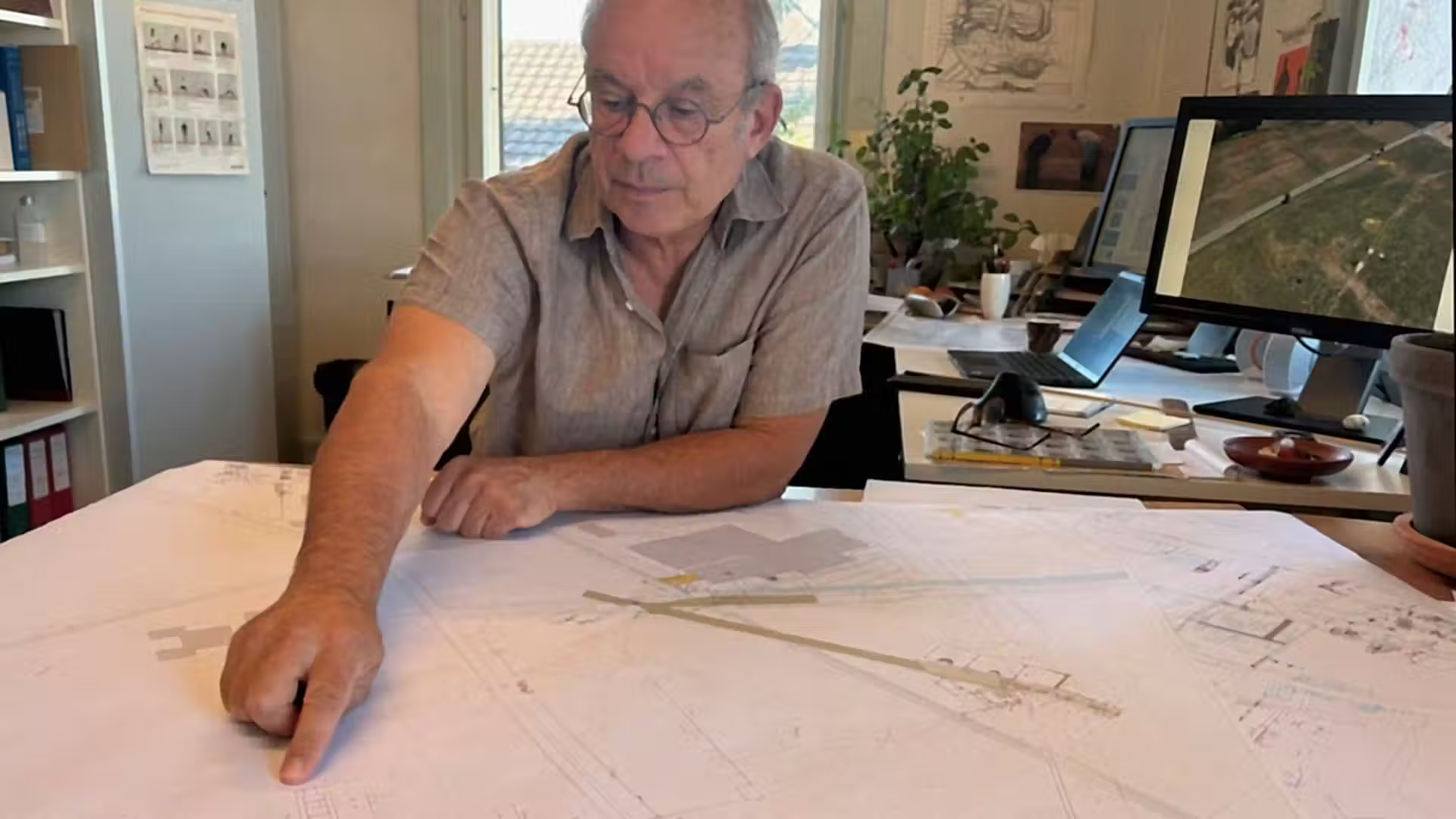
The newly identified Roman structures have been added to archaeological maps, with the additions marked in purple to distinguish them from previously documented sites. The exact number and full extent of the newly discovered structures were not specified in available reports.
The drought-driven archaeological discoveries represent one of several consequences of this year's extreme heat waves across Europe. The same conditions that exposed the Roman ruins also brought World War II shipwrecks to the surface in river beds across the continent, as water levels dropped significantly during the prolonged dry period.