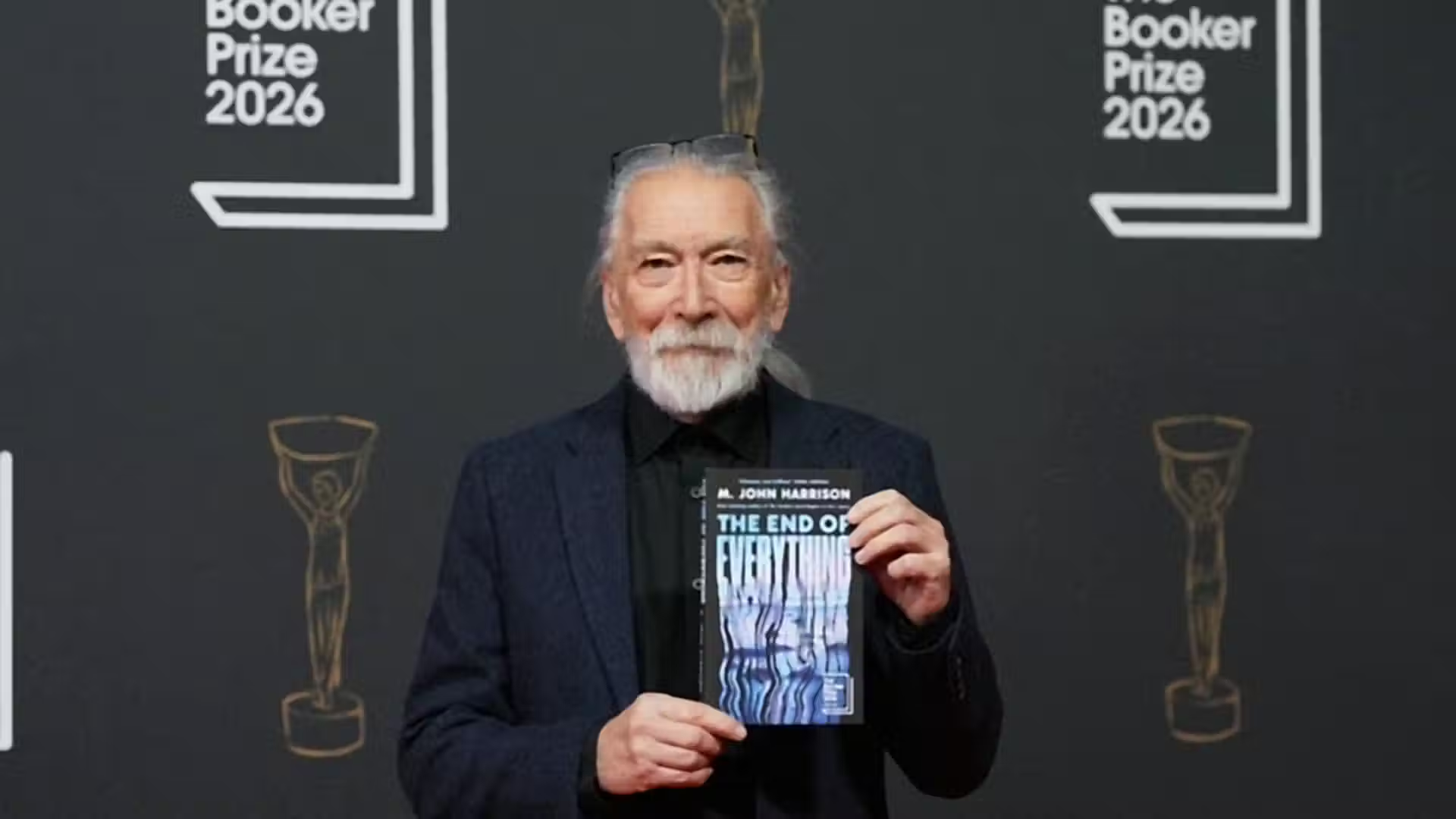
British author M. John Harrison won the 2026 Booker Prize on Monday for "The End of Everything," a satirical post-apocalyptic novel. At 81 years old, Harrison became the oldest winner in the prize's history, surpassing Margaret Atwood, who won at age 79 in 2019.
The award ceremony took place at Old Billingsgate in London, where Harrison received £50,000 ($67,000) and a trophy. It was his first time being shortlisted for the prestigious prize after a writing career spanning six decades.
"The End of Everything" is Harrison's 13th novel and the shortest book on this year's shortlist at just 198 pages. Set on England's Channel coast in the near future, the work depicts a post-catastrophe Britain where mysterious, shapeshifting alien entities called the iGhetti have invaded. The story follows a beachcomber named Phillip Tennent who lives with his gun-toting aunt as they navigate a collapsed society and encounter a puzzling artifact on the shore.
Jury chair Mary Beard, a historian, praised the novel for portraying "the politics of now through the lens of the future." She noted it was a book that "turns you inside out, raises a slight smile – and, surprisingly given the subject matter, leaves you with a twinge of optimism." The judging panel, which included Pulp frontman Jarvis Cocker, poet Raymond Antrobus, critic Rebecca Liu, and writer Patricia Lockwood, reached their decision unanimously.
Harrison beat five other finalists, including previous Booker winners Douglas Stuart ("John of John") and Marlon James ("The Disappearers"), as well as Pulitzer Prize laureate Elizabeth Strout ("The Things We Never Say"), Luke Kennard ("Black bag"), and Rebecca Perry ("May We Feed the King").
It is the first time a science fiction author has won the Booker Prize. Gaby Wood, chief executive of the Booker Prize Foundation, called it "a historic win" for a writer who emerged from the "bona fide SF world" rather than dabbling in the genre. Harrison himself resisted being confined by genre labels, saying his win demonstrates that "the era of genres as fences and boxes, pigeonholes, is over."
"I think this book shows, and the prize now shows, that it is very possible to write a book that mixes not just two genres, but three or four," Harrison told reporters at a post-ceremony news conference. Accepting the award, he said: "I really didn't expect to be up here this evening. You talk glibly about your life being changed, but it's weird when it happens. I feel like a proper writer at last."
Harrison also spoke to the importance of literary prizes in contemporary publishing. "Prizes like this one, not that there are any prizes quite like the Booker, are so important in a landscape of industrialised fiction," he said.