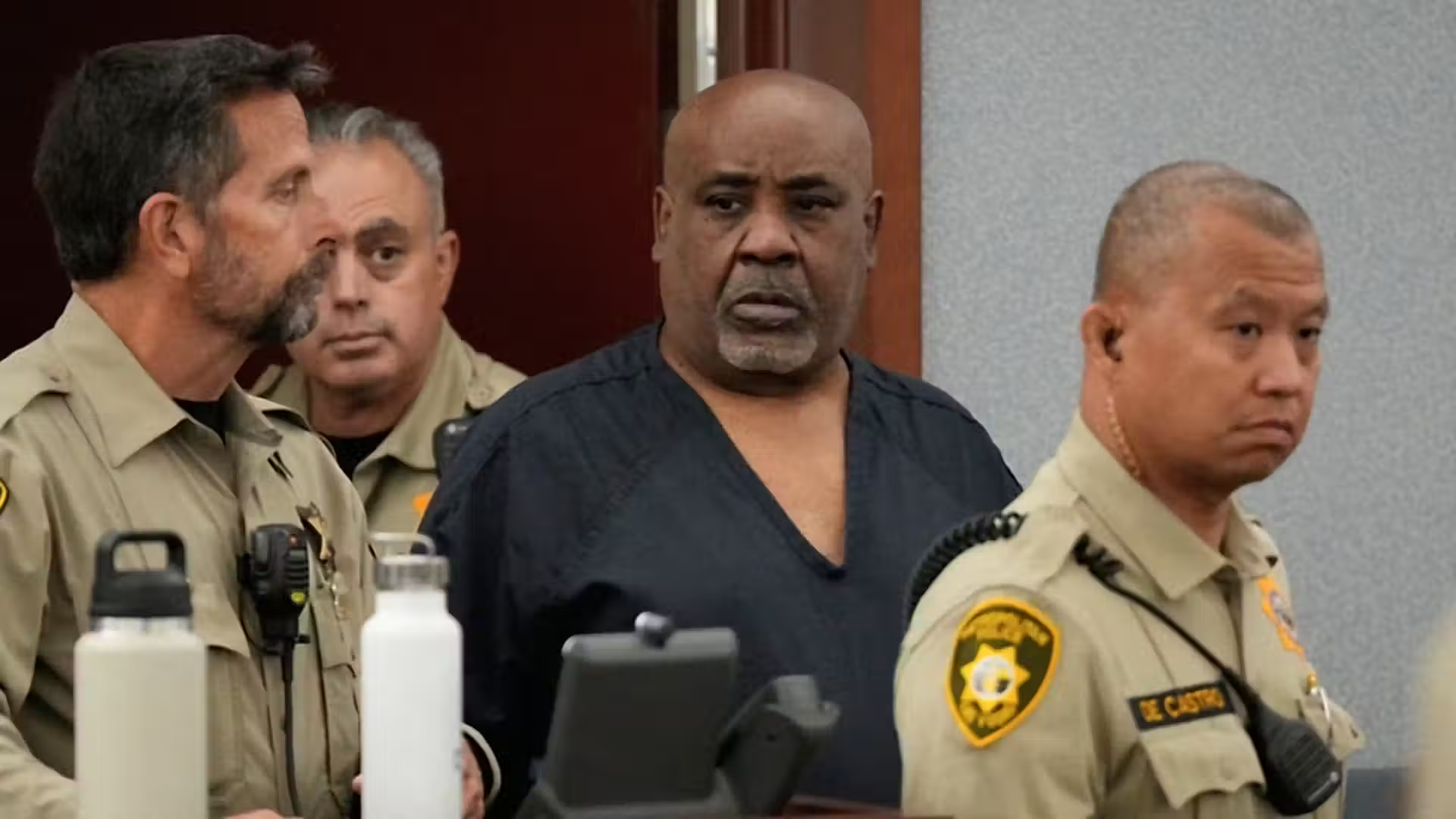
Duane "Keffe D" Davis, a former leader of the South Side Compton Crips gang, was sentenced Tuesday to 40 years to life in prison for orchestrating the 1996 drive-by shooting death of rapper Tupac Shakur, resolving one of America's most notorious unsolved murders.
Davis, 63, was convicted in August of first-degree murder with the use of a deadly weapon. Judge Carli Kierny imposed the sentence in Clark County District Court in Las Vegas, crediting Davis with 731 days already served in custody. Even with that credit, Davis will not be eligible for parole consideration until he is at least 100 years old.
"You don't get to take a man from his family," Kierny said during the hearing. "You don't get to take his very life, his whole future from him, and just walk away from it. Especially when that man is Tupac Shakur."
On September 7, 1996, Shakur, 25, was shot multiple times while sitting in the passenger seat of a black BMW driven by music executive Marion "Suge" Knight near the Las Vegas Strip. The rapper died six days later from his injuries. Knight survived the attack. For nearly three decades, the case remained unsolved, with no murder weapon recovered and witnesses reluctant to cooperate with authorities.
The breakthrough came when Davis began publicly discussing his involvement. In interviews and a 2019 tell-all memoir, Davis detailed his role in the shooting, claiming he was in the white Cadillac that pulled alongside Shakur's vehicle and had supplied the gun used in the attack. Prosecutors argued that Davis orchestrated the killing but did not fire the shots himself. Under Nevada law, a person can be charged with murder if they helped another person commit the act.
Prosecutors contended that Davis orchestrated the shooting in retaliation for an altercation involving his nephew, Orlando Anderson, who was assaulted by members of Shakur's entourage at the MGM Grand hotel in Las Vegas hours before the killing. During the trial, which lasted several weeks and included testimony from approximately 30 witnesses, prosecutors relied heavily on Davis' own statements to police and documentarians, as well as details from his memoir. Davis' defense attorney argued there was a lack of physical evidence directly linking his client to the crime and portrayed Davis as a liar attempting to profit from the murder. The jury deliberated for several hours before reaching a guilty verdict in late August.
Davis is the only person ever charged in connection with Shakur's death. At his sentencing hearing, he spoke briefly, telling the judge he wanted personal belongings police had taken from his house returned to him. Through his attorney, Michael Sanft, Davis announced he intends to appeal the conviction and sentence.
Shakur's sister, Sekyiwa Shakur, testified emotionally during the sentencing hearing. She said their mother had raised Tupac to be a human rights activist and treated him as someone with the potential to change the world. "He believed her," Sekyiwa Shakur said. "He went out into the world to do that. And I believe he would have succeeded."
Clark County District Attorney Steve Wolfson said in a statement that "justice has been served for Tupac Shakur and his loved ones," while acknowledging that no prison sentence can bring the rapper back.