France's Socialists retain control of major cities in local elections
Socialist parties held Paris, Marseille, Lyon and Lille in Sunday's municipal elections, while far-right and far-left made selective gains elsewhere.
8:46 PM
France's Socialist Party and allied candidates retained control of the country's four largest cities in municipal elections held Sunday, offering a boost to mainstream political forces ahead of next year's presidential contest.
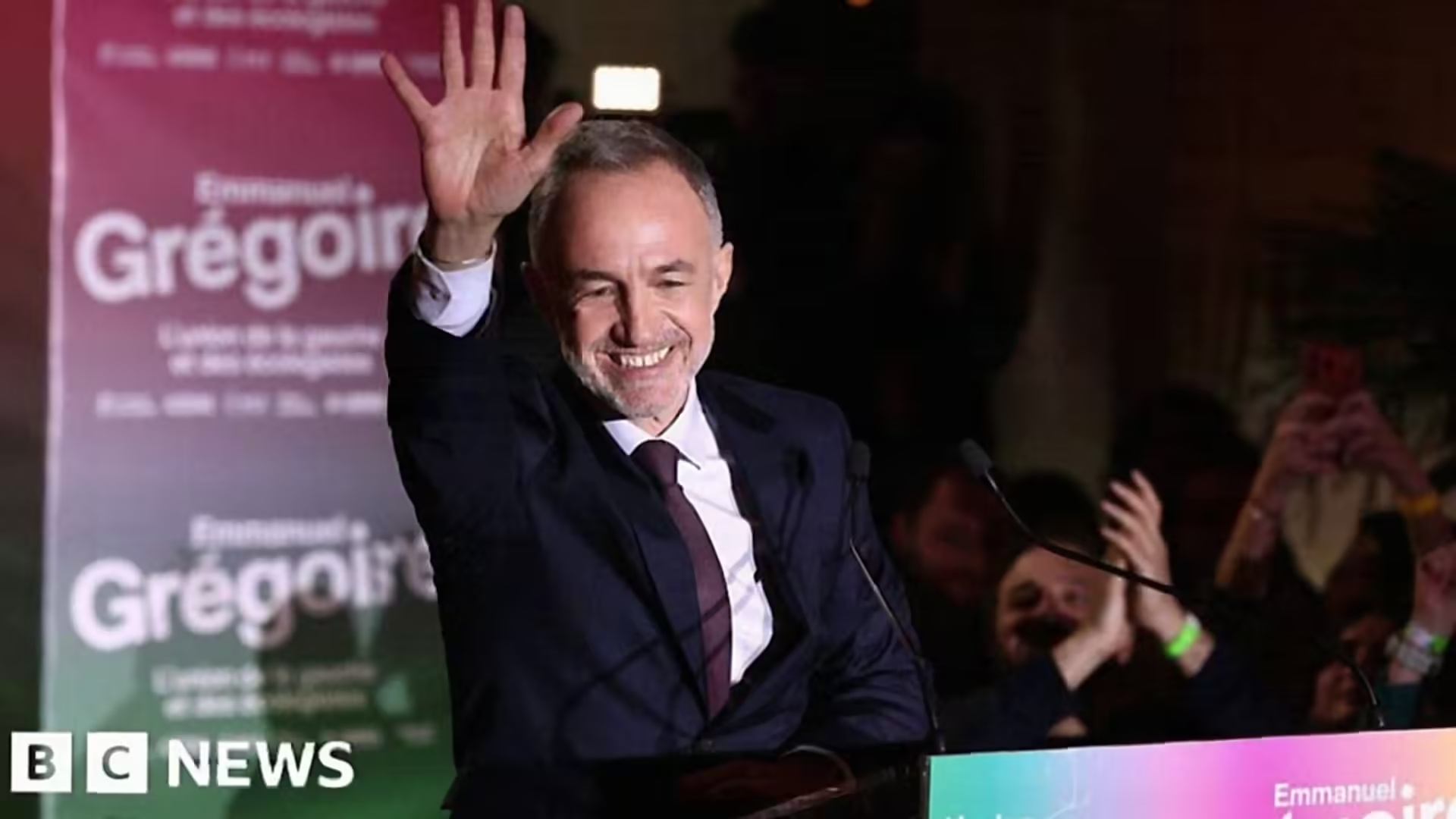
Socialist Emmanuel Grégoire became the new mayor of Paris, while left-wing administrations were returned in Marseille and Lille. In Lyon, ecologist mayor Gregory Doucet, who allied with Socialist support, also secured re-election.
The results demonstrated the electoral strength of mainstream parties in their traditional strongholds. In cities where incumbent Socialists avoided alliances with the far-left France Unbowed party, left-wing administrations won comfortably. Officials attributed this partly to accusations of sectarian anti-Semitism within the far-left party's ranks, which appeared to influence voter behavior in these contests.
The election night also saw gains for parties outside the mainstream. Far-right candidates performed strongly in several major cities during the first round of voting held a week prior, including Marseille, Nice and Toulon, demonstrating what observers described as the durable appeal of the National Rally party, which leads presidential polling. An ally of Marine Le Pen secured power in Nice, while the France Unbowed party gained control of Roubaix in northern France.
However, the far-right party's performance was uneven across the country. The National Rally performed less strongly outside its traditional strongholds in France's south, and tactical voting in the second round appeared to limit its gains even in those regions.
The municipal elections, which began last week and concluded Sunday, are being closely examined for what they may signal about France's political direction heading into the 2026 presidential elections. Among key questions is whether France faces a populist, far-right wave similar to those that swept Argentina, Italy and the United States in recent years.
A notable pattern emerged regarding alliances between mainstream left and far-left parties. In cities where such coalitions were attempted, voters turned toward the centre and right, particularly in long-time Socialist strongholds like Clermont-Ferrand and Brest. This suggested voter resistance to left-wing unity arrangements that included the far-left party.