Iranian drones strike British base in Cyprus as Middle East conflict expands across region
A British military base in Cyprus was hit by Iranian drones Monday, marking the first attack on an EU member state since hostilities began following US-Israeli strikes that killed Iran's Supreme Leader.
19 min ago
A British military base in Cyprus came under attack Monday when an Iranian drone struck a runway, authorities said, in what officials described as the first assault on a European Union member state since the outbreak of hostilities in the Middle East.
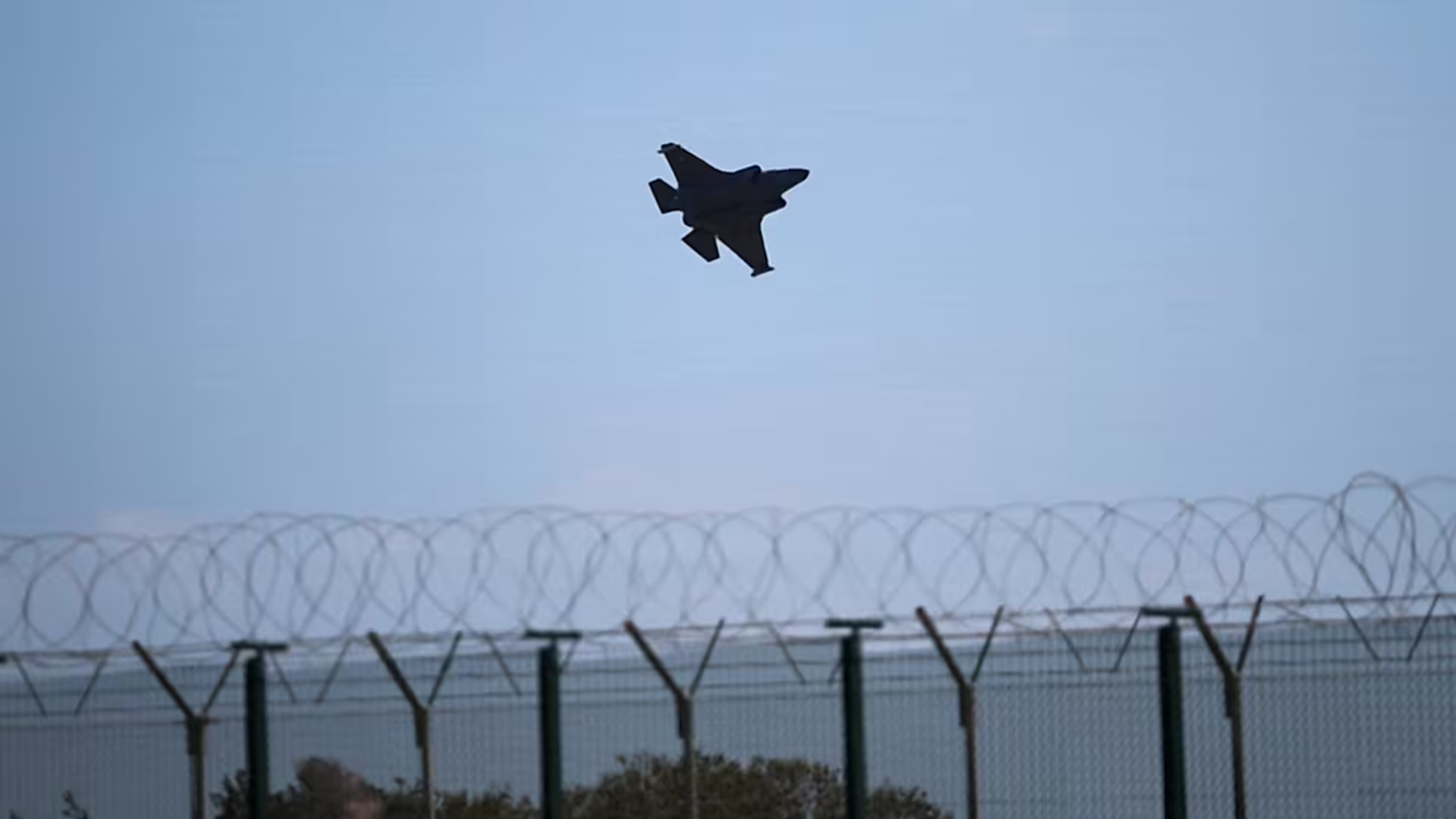
The drone hit the airfield at the base on Sunday night, causing minor material damage but no casualties, according to the UK government. Two additional drones approached the base on Monday at midday, but three British aircraft that had taken off from the facility intercepted them before they reached their target.
Local authorities said all three unmanned aircraft were launched from Lebanon by Hezbollah, the Iranian-backed militant group. The drones' small size and low flight altitude made them difficult to detect by radar systems.
The strikes on Cyprus followed Britain's decision to authorize the United States to use its military bases for operations against Iran. The attack marked an escalation in a conflict that has spread across multiple countries in the region over the past three days.
The broader Middle East conflict began Saturday with a joint US-Israeli military operation that killed Iran's Supreme Leader, Ayatollah Ali Khamenei, along with hundreds of other people, including civilians, according to the Iranian Red Crescent Society. The operation, described by US military officials as a "massive, overwhelming attack across all domains of warfare," targeted Iranian military infrastructure.
In response, Iran launched drones and missiles against Israel, US military bases in the region, and American allies in the Persian Gulf. The Iranian Revolutionary Guard Corps said it attacked 500 targets belonging to the United States and Israel.
Israel and Hezbollah exchanged strikes on Monday, opening a second front in the expanding conflict. Israeli and US warplanes launched fresh waves of strikes across Iran, with the Iranian Red Crescent reporting more than 500 people killed since the conflict began.
Damage and casualties have been reported across at least nine countries. Iranian attacks struck oil infrastructure and other targets across a 1,200-mile stretch of the region, from the Gulf of Oman, where a bomb-carrying drone boat struck an oil tanker, to Cyprus.
US President Donald Trump said in a telephone interview with CNN that the United States was preparing a "great wave" of attacks against Iran that could be executed in coming days. Trump defended the initial military operation, called "Epic Fury," and stated that American forces maintained strategic advantage. "We have the best military in the world and we're using it," Trump said. "We haven't even started hitting them hard. The great wave hasn't even happened yet. The big one is coming soon."
Chairman of the Joint Chiefs of Staff General Dan Caine detailed how American forces executed the initial attack, emphasizing the speed and coordination of the operation across multiple domains of warfare.
The conflict has disrupted air traffic and commercial maritime transport across the region. Analysts have warned of potential consequences including possible closure of the Strait of Hormuz, a strategic waterway through which more than 20 percent of global oil supplies transit, which could lead to fuel price increases within a week.