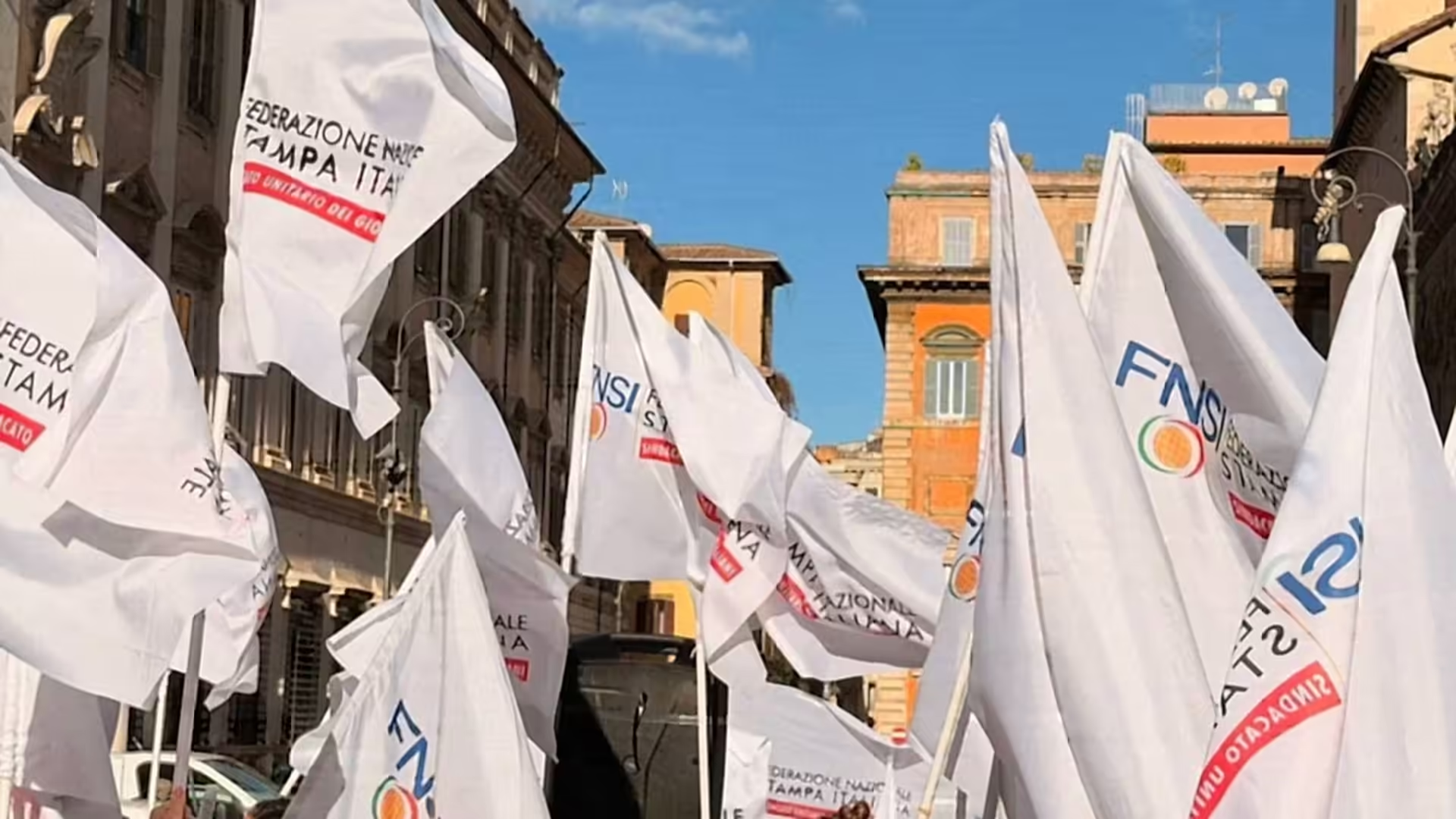
Italian journalists strike over contract frozen for decade
Journalists across Italy walked out Friday to demand renewal of a national labor contract unchanged since 2016, the second strike in months.
3:03 PM
Italian journalists staged a nationwide strike on Friday to press for renewal of their national labor contract, which has remained unchanged for ten years—a unique situation among dependent workers in Italy.
The strike, organized by the Federazione Nazionale della Stampa Italiana (FNSI), the national journalists' union, marked the second work stoppage in recent months. The first occurred on November 28, 2025. A third strike has already been scheduled for April 16.
News websites saw reduced updates during the action, and some newsroom operations were curtailed. Sky TG24 journalists participated in the stoppage, as did portions of the Focus and Focus Storia editorial teams. The Post's newsroom adhered collectively to the strike in solidarity with the broader category, though the outlet chose not to interrupt service delivery.
The contract has been frozen since 2016, when the media landscape underwent significant changes. Union representatives stated that since then, journalists have faced increased workload across multiple platforms while protections have diminished. Salaries have either stalled or declined in nominal terms, even as inflation rose approximately 20 percent over the decade.
The FNSI and affiliated press associations emphasized that contract renewal is not a privilege but a right. They argued that dignified pay, stable employment without permanent precarity, and conditions enabling free and independent journalism constitute fundamental protections. The unions framed the dispute as connected to constitutional guarantees, specifically Article 21 on press freedom and Article 36 on workers' rights.
Publishers represented by the Federazione Italiana Editori Giornali (FIEG) countered that the industry faces structural crisis. They noted that daily newspaper circulation fell from 2.5 million copies in December 2016 to just over 1 million today, and revenues have halved over the past decade. FIEG stated that public subsidies enabled publishers to continue producing quality information and invest in digital and artificial intelligence capabilities. The publishers said they have avoided collective layoffs despite these pressures, using other measures to manage costs.
Union representatives criticized publishers who received public subsidies for investing little in their products while cutting labor costs through workforce reductions and crisis management procedures. They contended that editors who received public funds should not shift financial burdens onto workers or the public.
A demonstration organized by press associations and the FNSI took place in Rome on Friday at 11:00, with speakers including union officials and journalists from RAI, ANSA, and other outlets discussing information sector issues.
The strike package includes five total work stoppages. Union statements stressed that ensuring dignified conditions for current workers, new entrants, and those leaving the profession, along with securing the future of information as a public good protected by the Constitution, represents a social obligation.