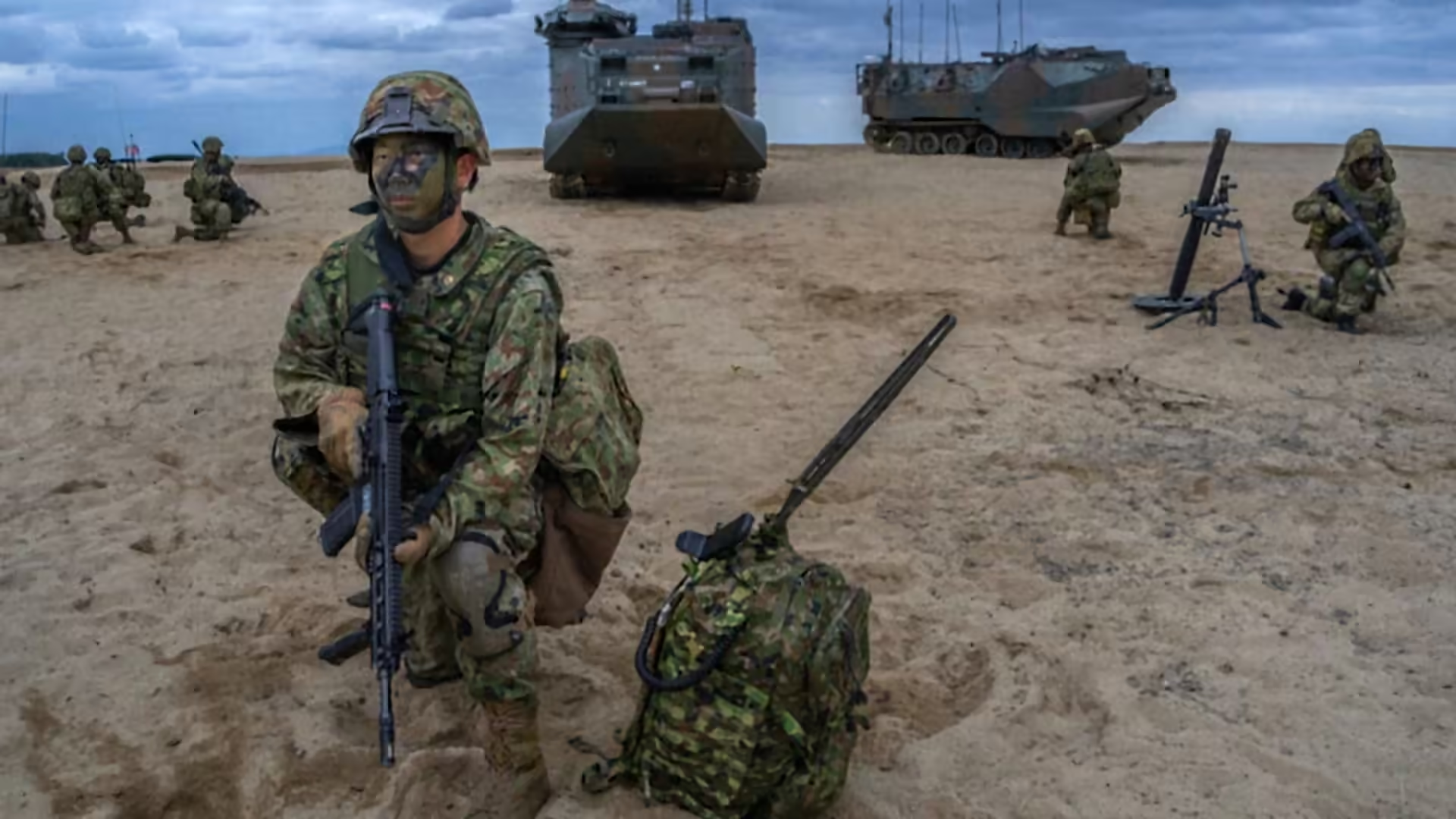
Japan's government on Tuesday approved a major overhaul of defense export rules, lifting long-standing restrictions on lethal weapons sales overseas in a significant departure from postwar pacifist policy.
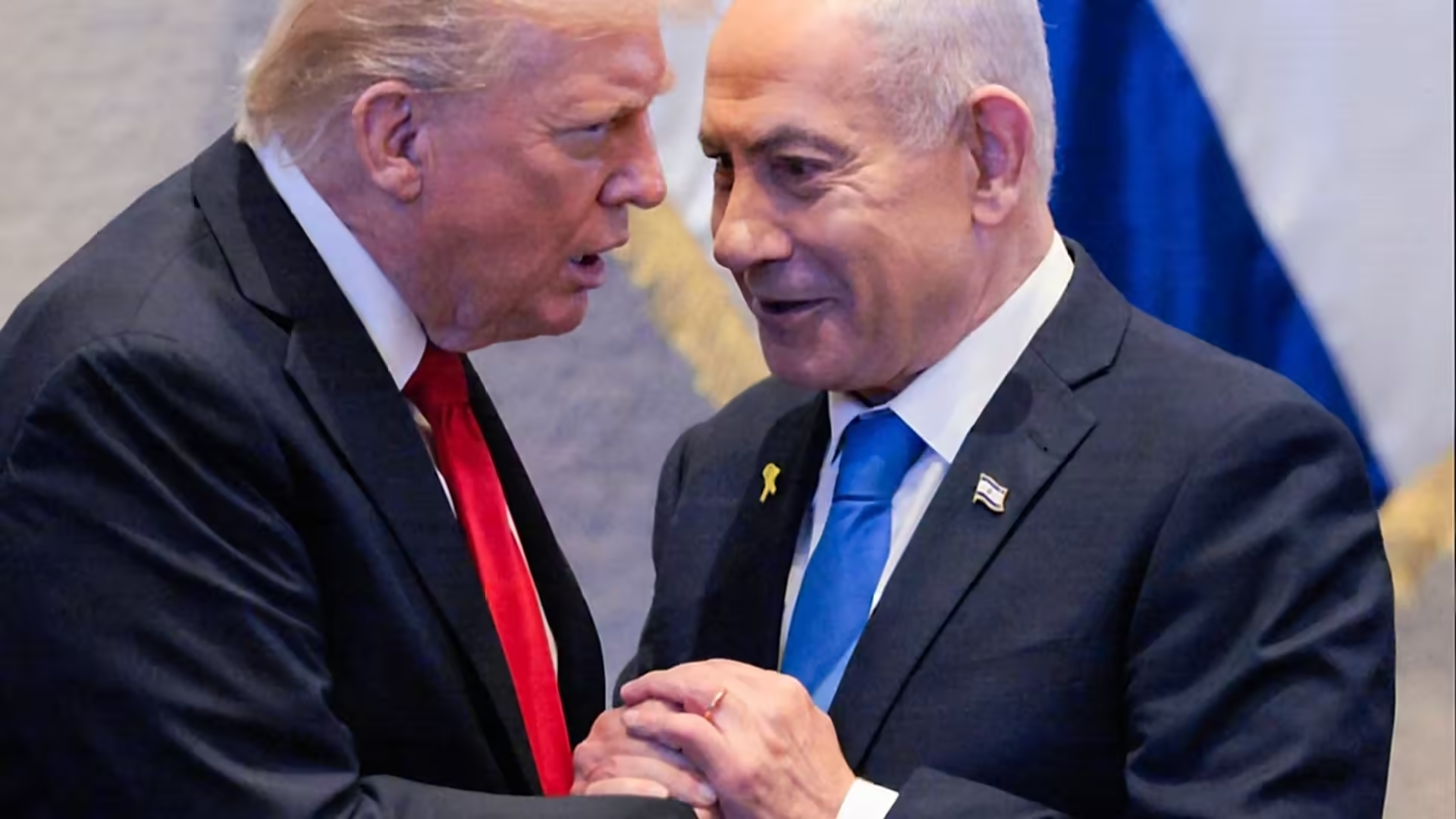
Prime Minister Sanae Takaichi announced the change at a cabinet meeting in Tokyo. In a post on X, she stated that "no single country can now protect its own peace and security alone, and partner countries that support each other in terms of defense equipment are necessary." She cited an "increasingly challenging security environment" as justification for the shift.
The policy change eliminates restrictions that previously limited arms exports to five categories: rescue, transport, surveillance, warning and minesweeping. Under the new framework, Japan can now export lethal weapons including fighter jets, missiles and warships to countries with which it has defense agreements.
Japanese newspapers reported that the new policy will encompass fighter jets, missiles and warships. The move comes after Japan recently sealed a $6.5 billion deal to supply warships to Australia and a separate $7.15 billion agreement for additional warship contracts with the country.
The revised policy will allow transfers of all defense equipment "in principle," according to Takaichi. However, recipients will be limited to countries that commit to use the equipment in accordance with international law. A ban on arms sales to countries involved in conflict will remain in place, though it does not cover nations that have defense pacts with Japan. Authorities said they will allow for exceptions "in special circumstances."
Japan can now sell weapons to 17 countries with which it has defense agreements, including the United States and the United Kingdom.
The announcement comes days after Japan welcomed more than 30 NATO envoys for a visit intended to demonstrate stronger ties between Tokyo and the alliance. The policy shift also reflects Japan's efforts to strengthen its domestic arms industry as a driver of economic growth while addressing regional security concerns, particularly from China.
Takaichi, who became Prime Minister in October 2025, has been an outspoken critic of Beijing. The change marks a milestone in Tokyo's departure from the pacifism that has characterized Japan's defense policy since the end of World War II.