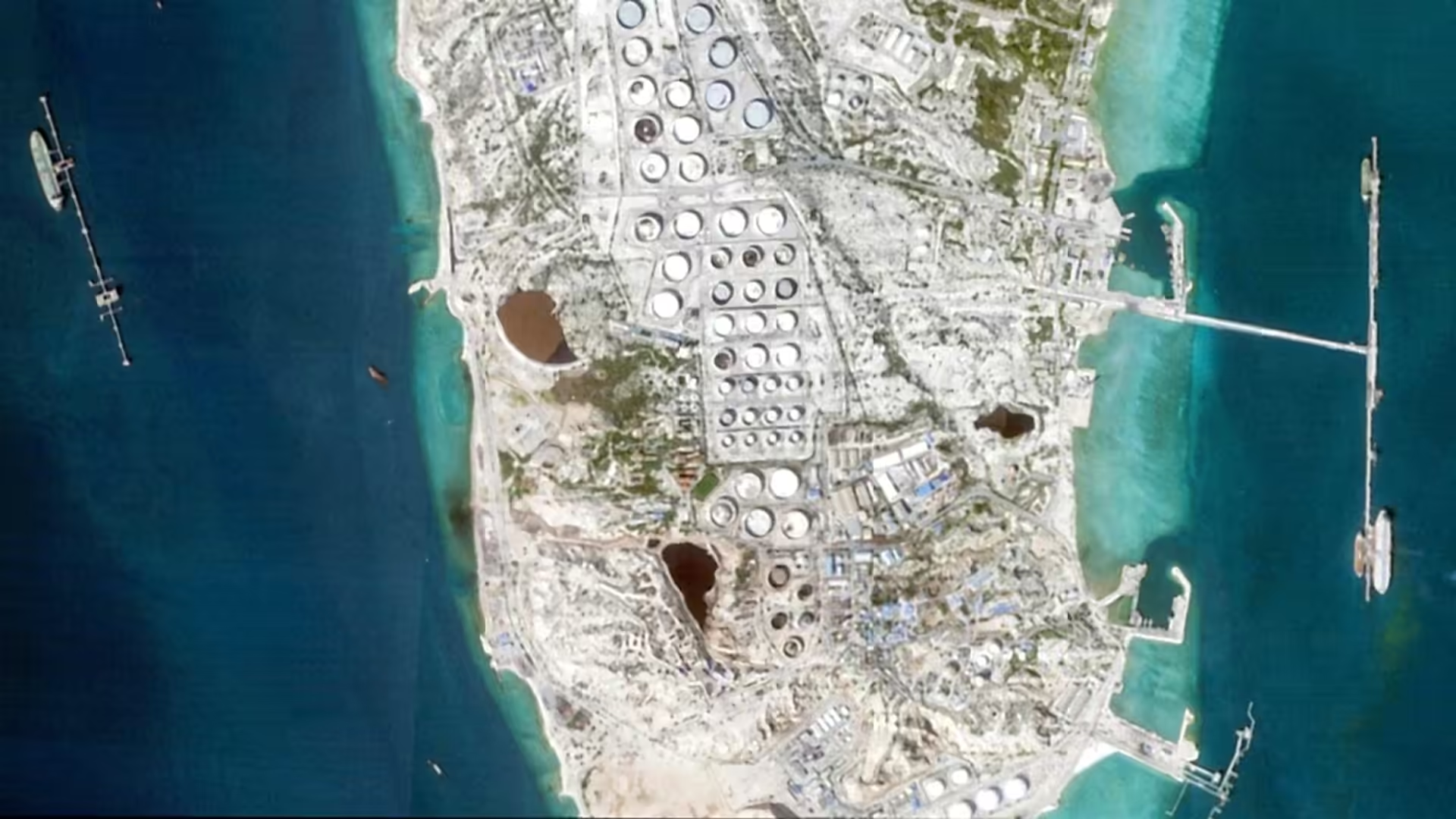
Trump announces powerful U.S. bombardment of Iran's Kharg oil island
President Trump said U.S. forces destroyed military targets on Kharg island, Iran's main oil export hub, and threatened further strikes on petroleum infrastructure.
10:24 PM
President Donald Trump announced Friday that U.S. armed forces carried out what he described as one of the most powerful bombardments in Middle East history, targeting military objectives on Iran's Kharg island.
Trump said the strike, executed by U.S. Central Command under his direction, "completely annihilated all military targets" on the island, which he called "the crown jewel of Iran." He made the announcement via Truth Social while preparing to depart Joint Base Andrews in Maryland for Florida.
Kharg island, located in the northern Persian Gulf approximately 30 kilometers from Iran's mainland coast and roughly 200 kilometers from Kuwait, covers about 22 to 24 square kilometers. The island serves as Iran's primary oil export terminal, handling nearly 90 percent of the country's crude oil exports to global markets.
Trump stated that U.S. forces did not strike the island's petroleum infrastructure during this operation. However, he warned that this could change if Iran continues to interfere with maritime passage through the Strait of Hormuz. Trump said Iran should "reconsider its decision" regarding interference with safe passage of ships through the waterway.
In his announcement, Trump asserted that the United States possesses "the most powerful and sophisticated weapons the world has ever known." He also claimed that Iran had planned to seize control of the Middle East and destroy Israel, stating that these plans have failed.
The island has held strategic importance for centuries. Historical records indicate economic activity dating to the 13th century, when it functioned as a key port for merchant vessels and later as a center for fruit production. Portuguese traders were the first Europeans to establish a presence there in the 16th century, followed by Dutch merchants who purchased the island.