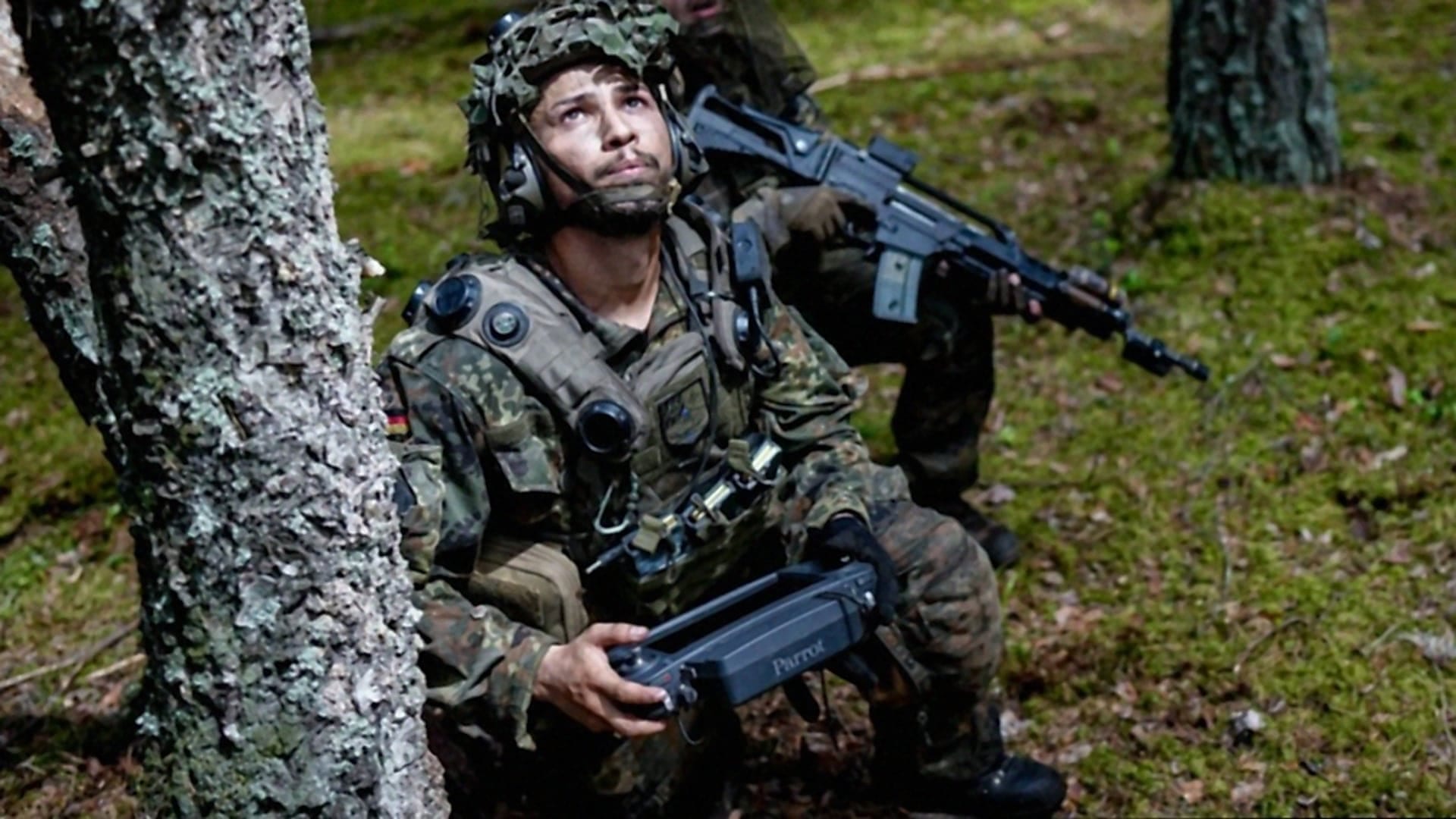
Germany's armed forces conducted their first tactical tests of kamikaze drones in Lithuania on Sunday during the Bundeswehr's largest military exercises in the Baltic nation, the German military said.
At the Rudninkai training ground near the Belarus border, German ground forces chief General Christian Freuding observed tests of loitering munitions made by German companies Helsing and Stark. The drones, fitted with inert warheads, struck tanks used as targets during the Freedom Shield exercise.
Germany approved the purchase of kamikaze drones in 2025 after years of debate over the weapons. The drones can circle an area searching for a target before crashing into it and exploding on impact.
Days before the drone tests, German troops also tried out Helsing's Clarity system, which uses artificial intelligence to rapidly analyze large volumes of information from satellites, drones and other sensors. The software can identify potential targets and recommend actions.
Freuding, who previously coordinated German weapons deliveries to Ukraine and is set to take over leadership of Germany's defense in February, said both technologies are essential to modern warfare.
Germany is preparing to permanently station an armored brigade in Lithuania, a first for the German military. The new Panzerbrigade 45, based at Rudninkai and Rukla, will have about 5,000 troops and 2,000 vehicles, including dozens of tanks, and is expected to be fully operational by the end of 2027.
About 1,800 German military personnel are already in Lithuania.
Berlin has accelerated defense spending since Russia's invasion of Ukraine, allocating hundreds of billions of euros to modernize its armed forces after decades of underinvestment.
NATO officials have warned for years of the threat posed by Russia, estimating that Moscow could have the capacity to launch a large-scale attack on allied territory as early as 2029.