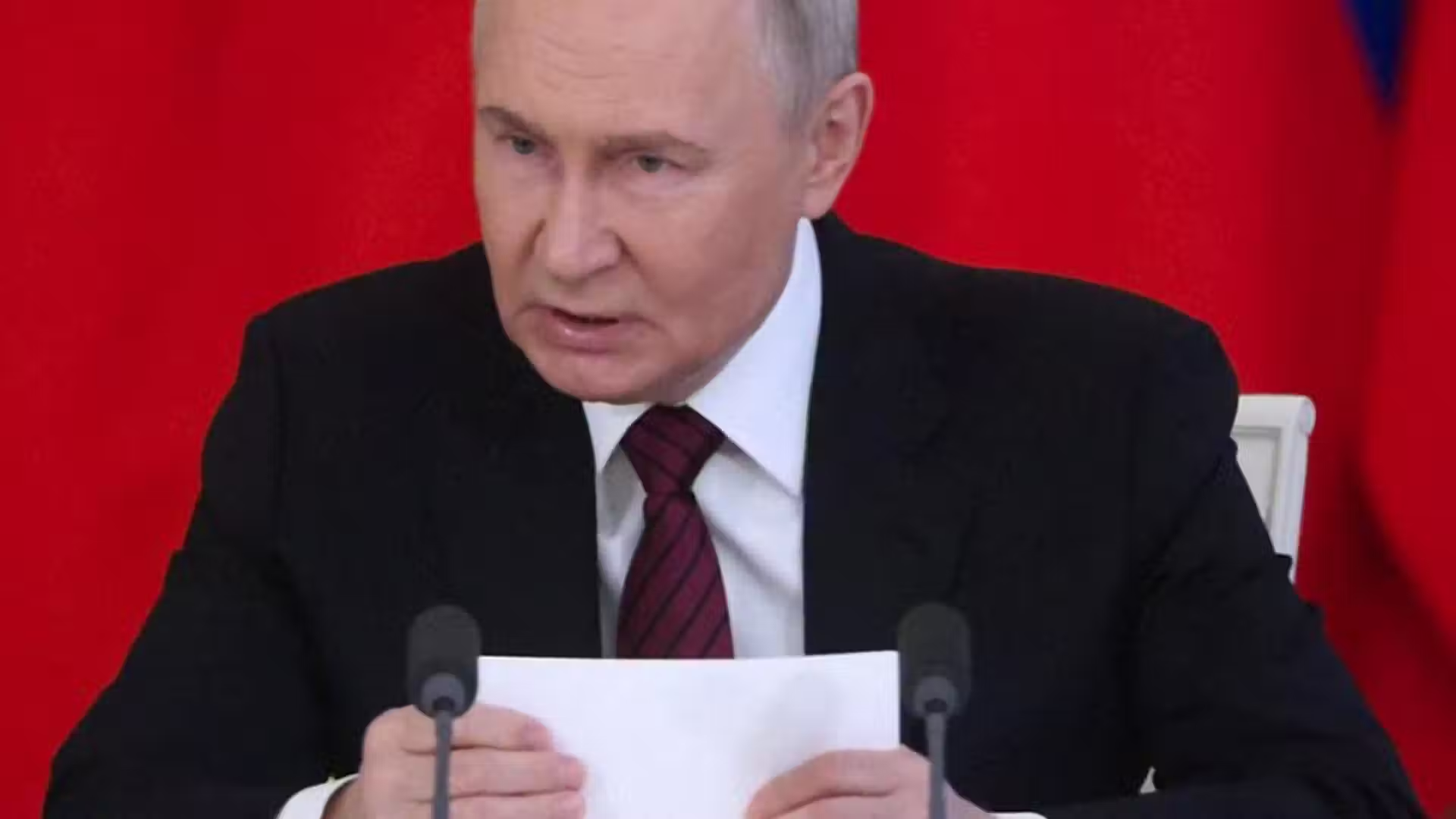
Russian President Vladimir Putin signed a decree Monday establishing a new authorized strength for the country's armed forces at 2,441,630 personnel, including 1,550,500 active-duty troops. The order took effect immediately upon signing on September 28.
The expansion adds 15,500 personnel compared to the previous authorized level set in August, when the total stood at 2,426,130 units with 1,535,000 active-duty military personnel. The decree requires the Russian government to allocate necessary federal budget funds to the Defense Ministry to implement the expansion, and nullifies a previous presidential order from June 12, 2026.
This marks the fourth time Putin has issued such a decree in 2026 alone. He previously signed similar orders in March, June, and late July. The cumulative increase since March totals 47,860 troops. The decree does not specify the rationale for the expansion or detail how the new positions will be filled.
The pattern of repeated military expansions reflects Russia's sustained personnel demands in its ongoing conflict with Ukraine, which has continued for more than four and a half years. Since Russia's full-scale invasion began in February 2022, Putin has increased the authorized strength of the armed forces seven times. Before the invasion, the authorized strength stood at 1.90 million personnel, including 1.01 million active-duty troops—meaning military personnel numbers have grown by more than 50 percent since the war began.
Ukrainian President Volodymyr Zelensky stated that Russia has already begun additional mobilization, as evidenced by the increasing military numbers. According to Ukrainian intelligence, 8,000 North Korean troops are currently present on Russian territory, with preparations underway to deploy an additional 10,000. Zelensky emphasized the importance of governments in countries from which Russia recruits personnel taking action to prevent such recruitment, and said Ukraine would inform each country about the Kremlin's military recruitment plans.
The pace of Russian advances on the battlefield has slowed this year, with widespread use of drones on the front making rapid operations increasingly difficult. Both Russia and Ukraine have sustained mounting casualties in the conflict.