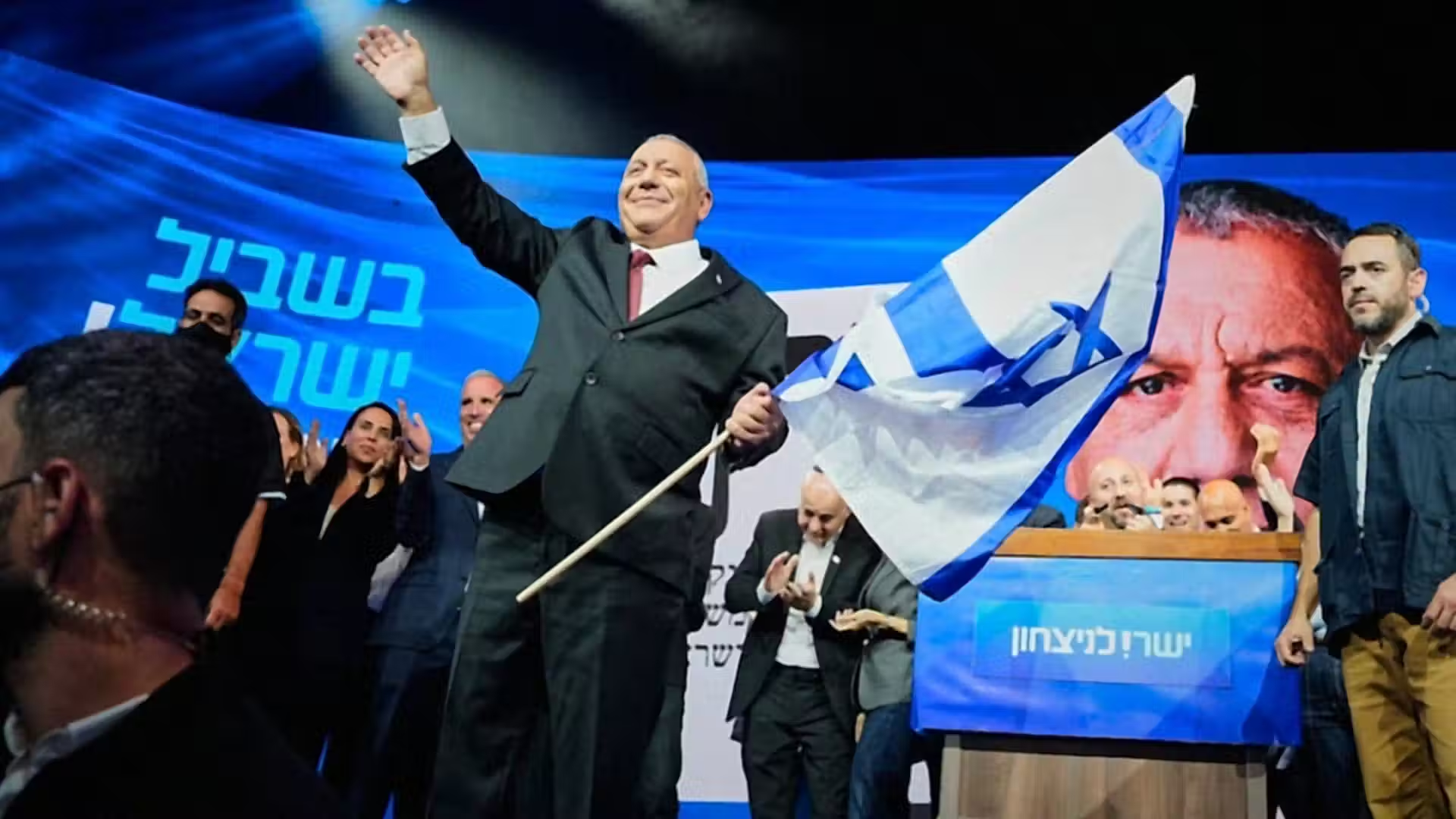
Israeli President Isaac Herzog gave opposition candidate Gadi Eisenkot the first opportunity to form a governing coalition on Saturday evening, November 7, 2026, following the October 27 general election that left neither side with a clear parliamentary majority. The decision represents a significant setback for Prime Minister Benjamin Netanyahu, whose Likud party won the most seats but failed to secure the 61 seats needed for a majority in Israel's 120-seat Knesset.
Eisenkot, a former chief of staff of the Israel Defense Forces who leads the Yashar party, will formally receive the mandate at a ceremony on Sunday at the presidential residence in Jerusalem. He has up to 28 days to assemble a government, with a possible 14-day extension if needed.
During consultations with Herzog this week, representatives from parties accounting for 67 lawmakers recommended Eisenkot be tasked with forming the government, compared to 46 recommendations for Netanyahu. The backing from Arab-led parties proved decisive, as they nominated Eisenkot despite his stated reluctance to form a coalition with them. Judaísmo Unido de la Torá, the ultra-Orthodox faction that historically supported Netanyahu, declined to recommend any candidate.
Netanyahu's Likud won 27 seats in the election, six more than Eisenkot's Yashar party, but his broader religious-nationalist coalition secured only 53 seats total—short of the 61 needed for a majority. Eisenkot's opposition bloc won 48 seats, while Arab-led parties secured a record 19 seats, giving them potential leverage in coalition negotiations.
Shortly before the announcement, Netanyahu called for a "national unity government" in a video statement, explicitly excluding Arab parties from any coalition he would lead. He characterized Arab parties as "supporters of terrorism" and claimed they "want to eliminate Israel," arguing that a national unity government should instead include his former coalition allies: the far-right Religious Zionism and Otzma Yehudit parties, as well as ultra-Orthodox factions.
"This is the time to establish a national emergency government. I will do anything possible to prove us worthy," Eisenkot posted on his X account immediately after Herzog's announcement.
The task ahead remains challenging. Israel is deeply divided and continues to grapple with the aftermath of the October 7, 2023, Hamas-led attacks and the subsequent three years of wars in Gaza and beyond. Assembling a parliamentary majority will require navigating complex coalition negotiations among parties with divergent policy priorities and ideological positions.
Eisenkot's appointment marks a potential turning point in Israeli politics. If successful in forming a coalition, he would replace Netanyahu as prime minister, ending the tenure of Israel's longest-serving premier. However, the fractured nature of Israel's parliament means that coalition-building remains fraught with obstacles and uncertainty. The opposition leader has declined to join forces with Arab parties despite their support, complicating his path to a stable majority.