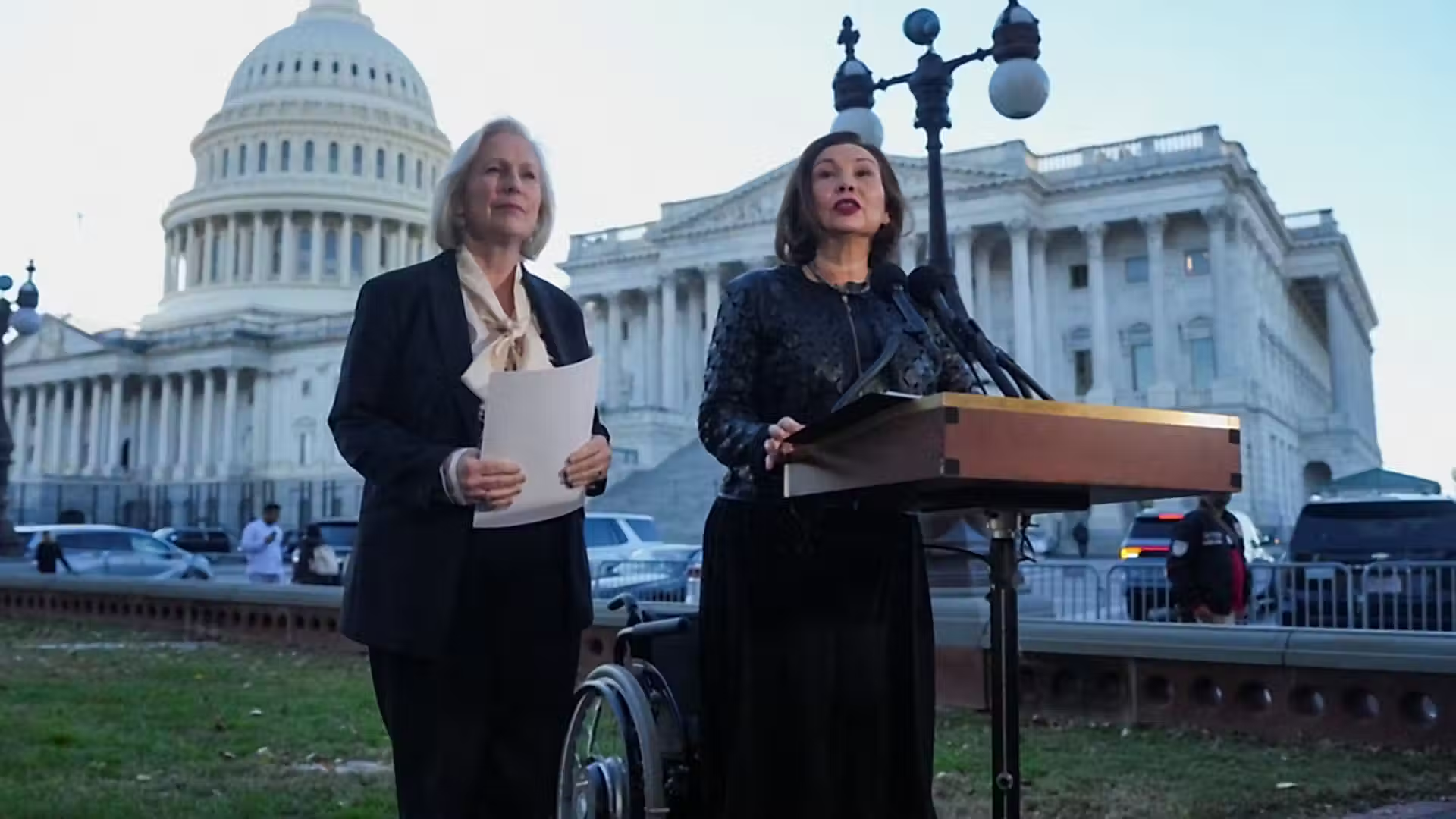
The U.S. Senate rejected a war powers resolution Thursday that would have directed President Donald Trump to end the war in Iran or obtain congressional approval to continue it, backing the president weeks after sweeping midterm defeats largely tied to Americans' frustration with the conflict.
The Senate voted 51 to 48, largely along party lines, to defeat the resolution that had previously passed the House. Three Republicans voted with Democrats in favor: Susan Collins of Maine, Lisa Murkowski of Alaska and Rand Paul of Kentucky. One Democrat, John Fetterman of Pennsylvania, voted against it.
The vote marked the first Senate test of Republican support for the unpopular war since Democrats won control of Congress in the November 3 midterm elections. The House had passed war powers resolutions three times, most recently in September with support from seven Republicans.
Democratic Senator Tim Kaine of Virginia said the midterm election result reflected Americans' unhappiness about the war and higher prices for food, fuel and other goods linked to the conflict. "Its unpopularity was made absolutely, manifestly clear in the election results of November 3," Kaine said before the vote.
Senator Tammy Baldwin, a Wisconsin Democrat, said on the Senate floor: "While I am confident that the next Democratic Congress will listen to the American people and end this war, time is of the essence."
Republican Senator Tim Sheehy of Montana argued that the United States could not ignore the threat posed by Iran. "Iran is not a war of choice," Sheehy said. "It's a war of necessity."
The resolution would not have forced Trump to end the war. It could not have been vetoed, but the White House ignored a similar resolution that Congress passed in June. The Trump administration contends that the Supreme Court has held such resolutions unconstitutional, citing a 1983 ruling in Immigration and Naturalization Service v. Chadha that Congress could not restrain the president's veto power in such a way. Democrats have argued that courts have never considered whether the precedent applies to war powers resolutions.
Trump considered resuming military strikes after the midterms but has mostly held off. Many Republicans, including Vice President JD Vance, have blamed their party's midterm losses on the war's unpopularity. Of the five House Republicans who voted for the resolution and were on the ballot in November, four lost reelection.
Democrats have pledged to end the war but are still debating their strategy. Some Senate Democrats have called for refusing to pass a government funding bill next month if it includes money for the war. The federal government is set to shut down December 12 unless Congress approves more funding.