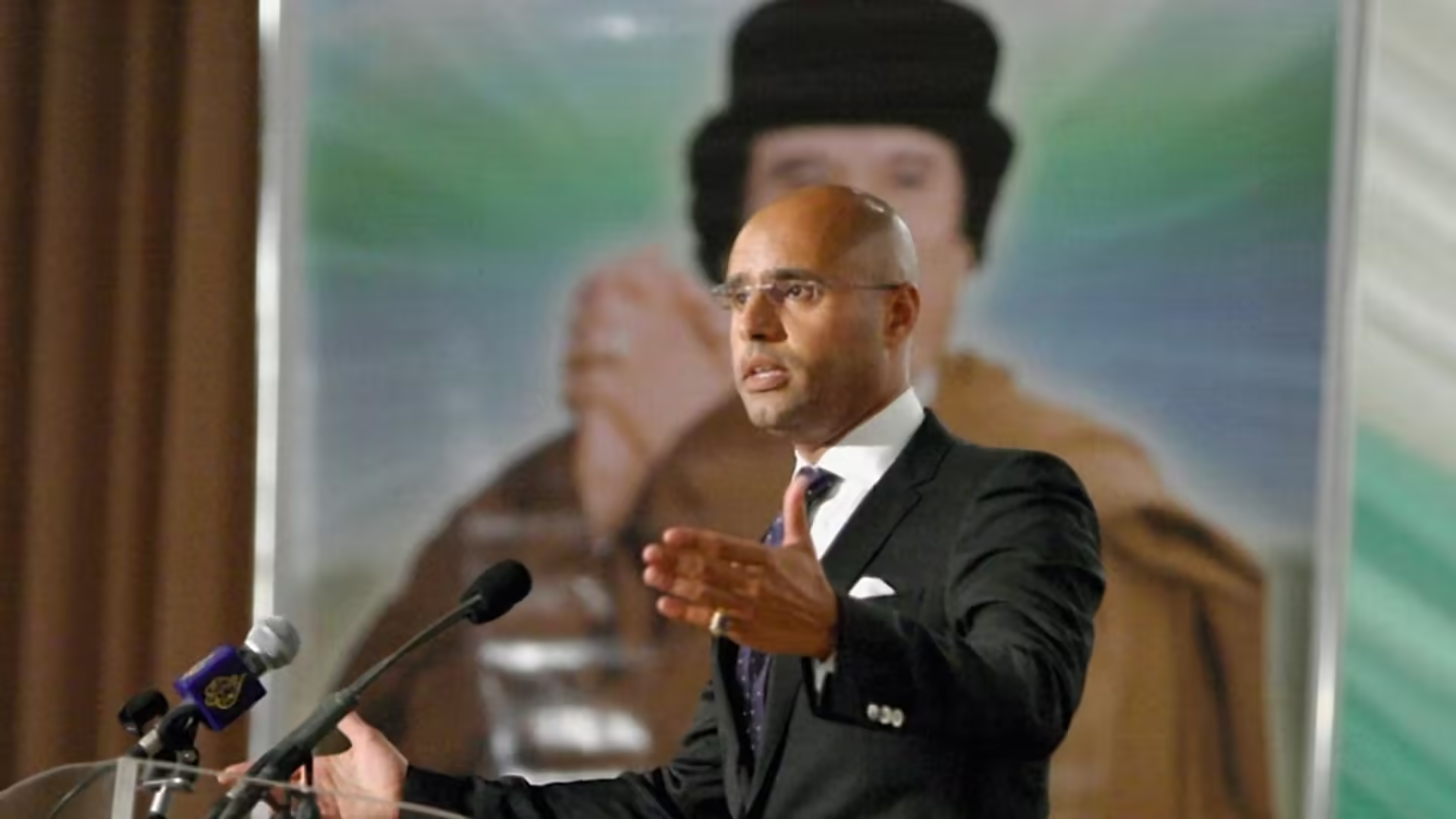
Saif al-Islam Gaddafi, son of former Libyan leader, killed in Zintan
The 53-year-old, once seen as his father's political heir, was shot dead near Libya's western city of Zintan on Tuesday, authorities said.
3 hrs ago
Saif al-Islam Gaddafi, son of Libya's former leader Muammar Gaddafi, has been killed in the western Libyan city of Zintan, according to multiple sources on Tuesday.
The 53-year-old was shot and killed in circumstances that remain unclear, though several accounts describe an armed attack. According to reports citing sources close to the family, four men opened fire on Gaddafi while he was in the garden of his residence, then fled the scene. His sister told Libyan television that he died near Libya's border with Algeria, without specifying how.
The death was confirmed by Abdullah Othman, Gaddafi's political adviser, and reported by the Libyan News Agency. Libyan media outlets including Libya al-Ahrar and local television stations also reported his death, citing figures close to him.
Armed clashes erupted in the area around Zintan and in the desert region of al-Hamada, with fighting reported between local militias and groups loyal to the former regime. The Brigade 444, a military unit of Libya's Government of National Accord, denied involvement in Gaddafi's death.
Gaddafi was born in 1972 and was long considered the most influential figure in Libya after his father, who ruled the country from 1969 until being ousted and killed during an uprising in 2011. He played a key role in Libya's rapprochement with the West from 2000 until the collapse of the Gaddafi regime.
After his father's removal from power, Gaddafi was indicted by the International Criminal Court for crimes against humanity. He had been based in Zintan for the past decade, residing in a mountainous region in southwestern Libya where he had retreated following a failed attempt to return to power in 2021.
Though Gaddafi never held an official position in Libya's government, he was widely regarded as his father's number two during the regime. In recent months, he had publicly warned of deteriorating security conditions in the country and the risk of renewed civil conflict.
Libyan authorities have not yet commented publicly on his death. The exact circumstances surrounding the killing remain unclear, with competing accounts circulating in Libyan media.