Venezuela's interim president hails passage of amnesty bill in first parliamentary vote
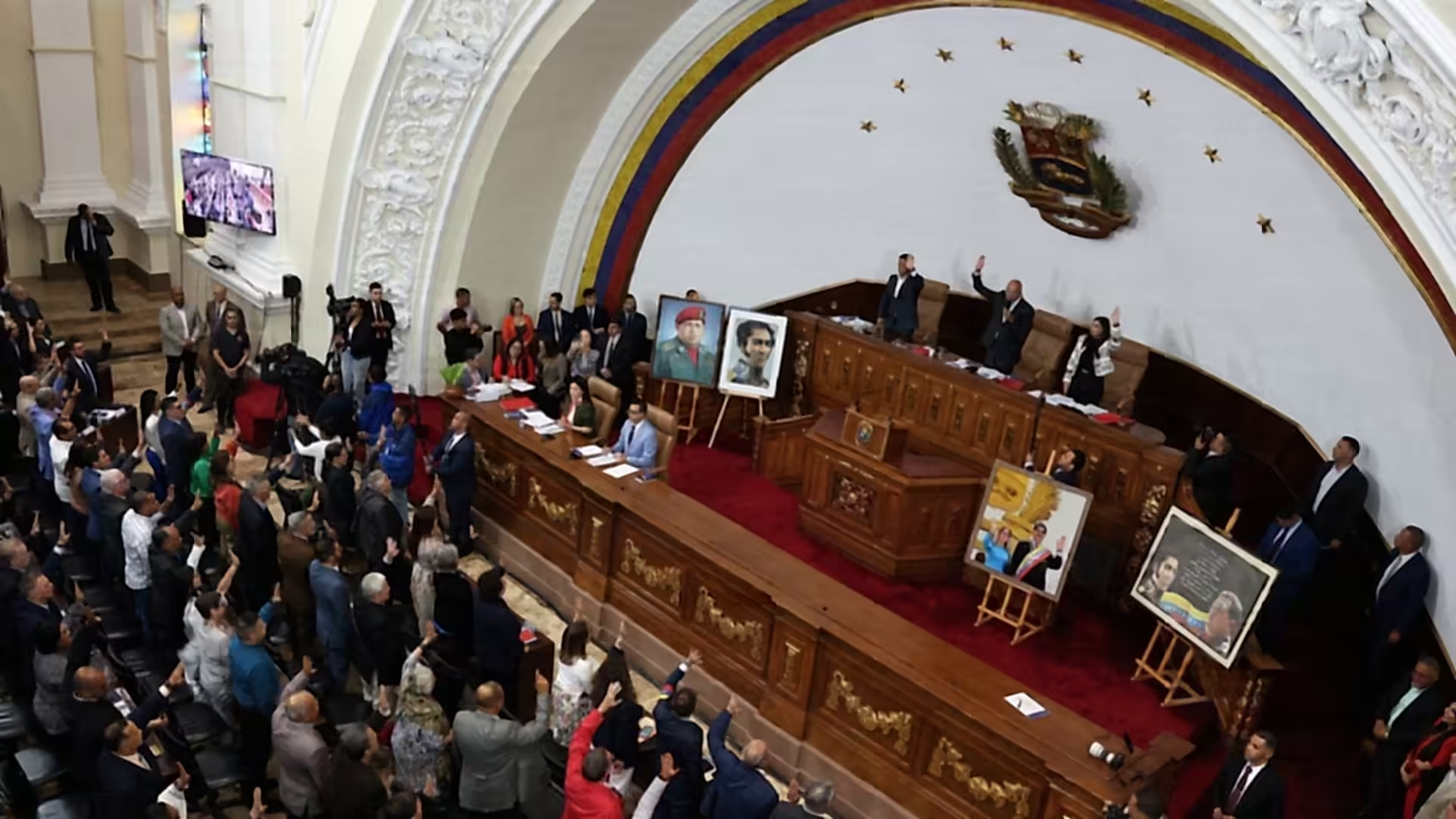
Venezuela's National Assembly unanimously approved an amnesty law in first reading Thursday, potentially freeing hundreds of political prisoners detained under the Maduro regime.
7 hrs ago
Venezuela's National Assembly unanimously approved the first reading of an amnesty bill Thursday, marking a significant step toward potential release of political prisoners held under the previous government.
Interim President Delcy Rodríguez, who succeeded Nicolas Maduro after his capture by U.S. forces on January 3, described the vote as "a very important event" for "peace and national reconciliation." The legislation, formally titled the Amnesty Law for Democratic Coexistence, covers the 27-year period of chavismo from 1999 to 2026.
The bill would provide clemency to individuals detained on charges including "terrorism" and "treason"—accusations historically used against political opponents. It also includes revocation of political disqualifications imposed during the chavista era, a provision that would potentially benefit opposition leader María Corina Machado, who was barred from competing against Maduro in the contested 2024 elections and won the Nobel Peace Prize last year.
Humanitarian organizations estimate approximately 700 people remain imprisoned for political reasons in Venezuela. In recent weeks, 383 political prisoners have been released as part of a gradual process ordered by Rodríguez. The amnesty bill could lead to the release of hundreds more opposition leaders, journalists and human rights activists.
Members of both the governing socialist party and the opposition delivered speeches in favor of the legislation during Thursday's debate. Jorge Rodríguez, head of the National Assembly and brother of the interim president, acknowledged the need for reconciliation. "We ask for forgiveness, and we also have to forgive," he said during the debate. He also noted that "the path of this law is going to be full of obstacles, full of bitter moments," but stated it would be necessary to proceed in order to help the country move forward.
The bill excludes individuals responsible for grave violations of human rights from amnesty provisions. A parliamentary commission has been tasked with submitting the articles to public consultation before the second and final reading. Given the socialist party's absolute majority in the unicameral parliament, passage of the final vote is widely expected.
This would be the second amnesty law in the chavista era; the first was approved by Hugo Chávez in 2007. When announcing the bill late last month, Rodríguez stated: "May this law serve to heal the wounds left by the political confrontation fueled by violence and extremism. May it serve to redirect justice in our country, and may it serve to redirect coexistence among Venezuelans."