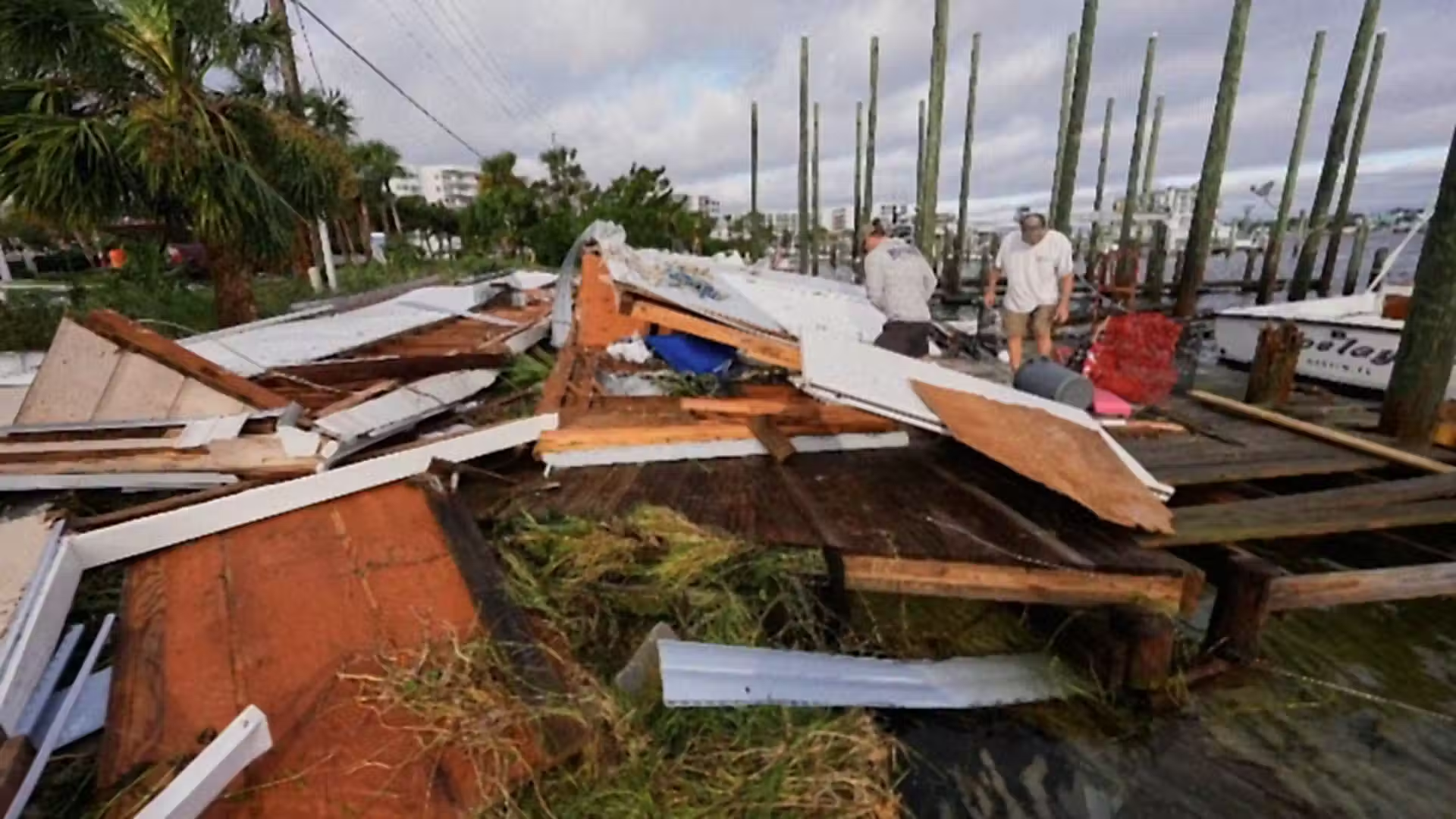
Hurricane Isaias made landfall near Destin, Florida, on Friday evening at approximately 8:30 p.m. ET as a Category 2 hurricane with maximum sustained winds of 105 mph, according to the National Hurricane Center. The storm had briefly strengthened to a major Category 3 hurricane earlier in the day with winds reaching 120 mph before weakening ahead of landfall.
Isaias marked the first Atlantic hurricane of the 2026 season and was on track to tie or break a 121-year-old record as the latest arriving initial hurricane of the Atlantic season, with the previous record dating to October 8, 1905.
At least four deaths were reported across Florida and Alabama as the storm moved inland. Two fatalities occurred in Escambia County, Florida, and two in Alabama, with at least two resulting from trees falling on homes—one each in Escambia County and Birmingham, Alabama.
The hurricane caused widespread damage across the region. Nearly a million people lost electricity, with more than 911,000 consumers without power in Florida, Alabama, and Georgia by early Saturday. Trees were downed across affected areas, highways experienced flooding, and tens of thousands of people had evacuated threatened coastal zones ahead of the storm's arrival.
The National Hurricane Center had warned of life-threatening storm surge reaching up to 9 feet in some areas, dangerous hurricane-force winds, heavy rainfall, and the possibility of tornadoes. An Extreme Wind Warning was in effect for parts of the Florida Panhandle, with wind gusts of 95 to 115 mph possible as the storm moved ashore. Governors of Florida, Alabama, Georgia, and Mississippi declared states of emergency, with both Florida and Alabama instituting mandatory evacuations for coastal areas.
By Saturday, Isaias had weakened to a post-tropical cyclone as it moved northward through Alabama and Georgia. The system was forecast to pass through the Tennessee Valley and dissipate by Sunday, though officials warned that rain and flooding remained concerns as the system continued inland, with some minor impacts possible across the Mid-South including periods of rain and gusty winds of 25 to 35 mph or higher.
The hurricane's approach to the Gulf of Mexico prompted significant disruptions to U.S. energy production. American energy producers suspended approximately 72% of daily oil production and 59% of natural gas output in the Gulf, representing roughly 1.5 million barrels of oil per day and 1.3 billion cubic feet of natural gas, according to the U.S. Bureau of Safety and Environmental Enforcement. Personnel were evacuated from 129 production platforms, representing approximately 35% of the 371 manned facilities operating in the region, as well as from eight non-dynamically positioned drilling rigs.